
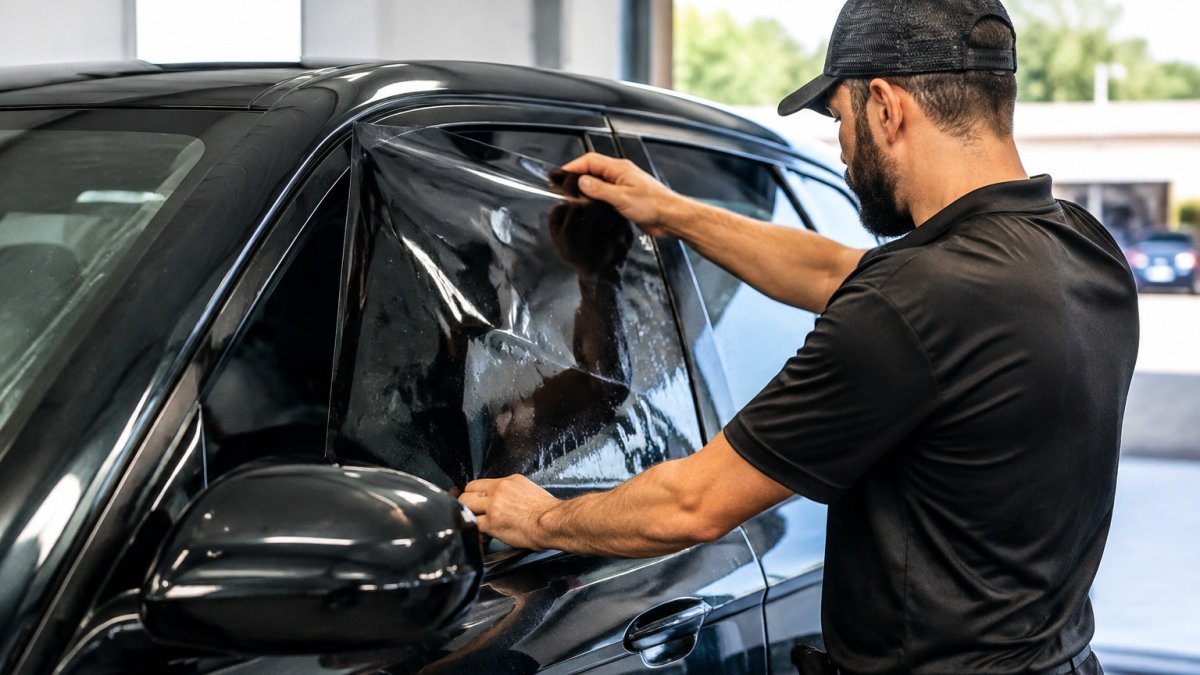
Last Updated: November 8, 2026
Quick Summary
Ceramic window tint is worth it for drivers who want cooler cabins, 99% UV protection, and reduced glare without signal interference. The film reflects infrared heat instead of absorbing it, protects interiors from fading, and stays color-stable, though it costs more upfront than dyed or carbon tint.
- Ceramic film reflects infrared radiation away from glass, while dyed film absorbs heat and re-radiates it inward.
- Driftcore's ceramic film blocks 99% of UV rays, protecting skin and slowing interior fading.
- Ceramic tint is non-metallic, so it does not interfere with GPS or phone signals.
- Compare TSER, IR rejection, VLT, and UV rejection on the film's spec sheet before buying.
- Driftcore offers a lifetime warranty on film and workmanship for as long as you own your vehicle.
Table of Contents
- What Ceramic Window Tint Actually Does to Your Cabin
- Benefits of Ceramic Tint vs Regular Tint: Heat, UV, and Glare
- Ceramic Window Tint Pros and Cons for Real Drivers
- Benefits of Ceramic Window Tinting at Night: Visibility and Glare
- Ceramic Window Tint Cost and What You Get for the Money
- How to Compare Film Specs and Choose Tint Darkness
- Get a Free Quote on Mobile Ceramic Tint
- Frequently Asked Questions
What Ceramic Window Tint Actually Does to Your Cabin
Ceramic window tint is a film made with nano-ceramic particles that blocks heat, UV rays, and glare without using metal or dye layers. At Driftcore window tint, we install 99% UV rejection ceramic film that keeps cabins cooler and interiors protected.
Here's the short version. Ceramic film targets the part of sunlight that heats your car and fades your dashboard. It does the job without the downsides of older films.
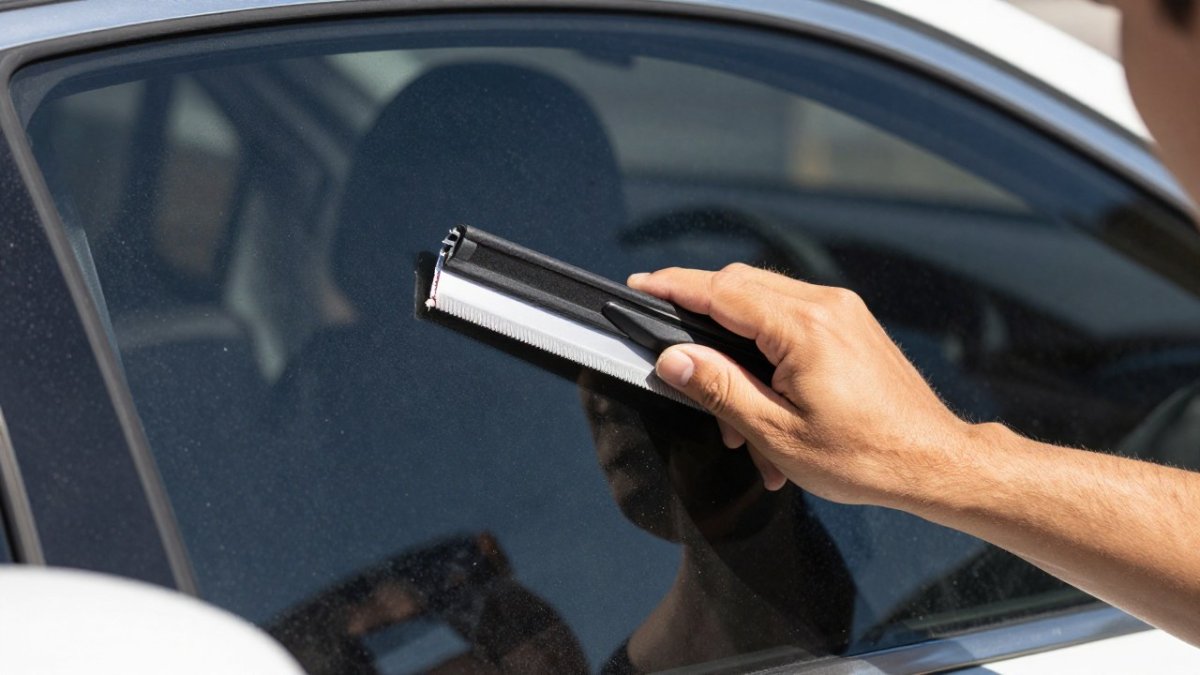
A cabin with ceramic film can stay cooler on a hot day, with less strain on the air conditioning.
How Nanoceramic Film Blocks Heat Differently
Traditional films absorb heat. Ceramic film rejects it.
Nanoceramic technology uses tiny ceramic particles that reflect infrared radiation before it enters the cabin. Infrared radiation carries most of the solar heat you feel through glass.
- Standard film: absorbs heat, then re-radiates it into the cabin
- Ceramic film: reflects infrared heat away from the glass
- Result: lower cabin temperature and less strain on your air conditioning
Ceramic film handles infrared energy differently from dyed film, which is why it is generally described as rejecting more heat.
Benefits of Ceramic Tint vs Regular Tint: Heat, UV, and Glare
The gap between ceramic and regular film shows up in three places: heat, UV protection, and glare.
Heat rejection is a major strength of ceramic film. Dyed tint and standard window film absorb solar heat and eventually pass it inward. Ceramic film reflects infrared radiation, so less heat enters the cabin at all.
UV protection matters just as much. Ceramic film blocks 99% of UV rays. That protects your skin on long drives and guards upholstery, dashboard, and trim from interior fading.
Glare reduction rounds it out. Ceramic film helps reduce harsh glare from headlights and sun while keeping optical clarity high.
| Feature | Ceramic Tint | Standard or Dyed Tint |
|---|---|---|
| Heat rejection | Reflects infrared radiation | Absorbs and re-radiates heat |
| UV blocking | 99% UV rejection | Lower, varies by film |
| Glare control | High clarity, less haze | Can look hazy or dark |
| Color stability | Resists fading and discoloration | Prone to purple or faded look |
| Signal interference | None, no metal layers | Metal films can block signals |
Ceramic film is non-metallic, so it does not use the metal layers that can interfere with some electronics.
Ceramic Window Tint Pros and Cons for Real Drivers
Every honest review needs both sides. Here are the ceramic window tint pros and cons that actually affect owners.
Pros:
- Cooler cabin and lower AC load
- 99% UV blocking for skin and interior protection
- Strong glare reduction for day and night driving
- No signal interference with GPS or phones
- Long film lifespan with color stability
Cons:
- Higher upfront cost than dyed or carbon tint
- Not all shops install it correctly
- Cheap ceramic film can still bubble or discolor
The quality of a ceramic installation depends heavily on workmanship, so choosing a provider with careful installation practices matters.
Ask about the warranty before you pay.
Benefits of Ceramic Window Tinting at Night: Visibility and Glare
Night driving is where cheap tint shows its flaws. Ceramic film holds up.
Ceramic film can help with glare from oncoming headlights while keeping visible light transmission high enough for clear vision.
- Reduced headlight glare from behind and ahead
- Better contrast on dark roads
- No hazy or distorted view that dyed film can cause
- Clear rear visibility for backing up
If you drive at night often, this is the section to remember. Glare reduction isn't just comfort. It's safety.
Ceramic Window Tint Cost and What You Get for the Money
Ceramic window tint generally costs more than dyed or carbon film. Pricing depends on the vehicle, film grade, and installation details, so contact Driftcore window tint for current pricing or a quote.
When comparing options, consider total cost over the years you keep the car, including the possibility of re-tinting if a film fails.
What you're actually buying:
- Heat rejection that reduces cabin temperature and AC load
- 99% UV blocking that protects skin and slows interior fading
- Glare control with high optical clarity
- Color stability that resists the purple or hazy look of cheap film
- A warranty that covers both film and workmanship
When comparing quotes, it helps to ask what film line is being used, what the warranty covers, and whether removal of a failed film is included.
For a quote on your car, get a free quote on mobile ceramic tint.
How to Compare Film Specs and Choose Tint Darkness
Most buyers pick tint by look alone. That's the mistake. Compare specs first, then choose darkness. This is the part most buying guides skip, so here's how the numbers actually work.
The four specs that matter, and what they mean:
- Visible light transmission (VLT). The percentage of visible light that passes through the film. VLT determines how dark the glass looks and is the measure commonly used in state tint regulations.
- Total solar energy rejected (TSER). The share of total solar energy, visible light, infrared, and ultraviolet combined, that the film keeps out of the cabin.
- Infrared (IR) rejection. The share of infrared energy blocked. IR rejection is one measure of a film's heat performance and is best read alongside other specifications.
- UV rejection. The share of ultraviolet blocked. Driftcore's ceramic film is rated at 99% UV rejection.
Published specifications may be measured under different test conditions, so ask the installer for the film's spec sheet on the exact line being quoted.
Choosing tint darkness. VLT is the tint percentage, and lower VLT means darker film. Legal tint limits vary by state and window position, so check your state's current rules before you commit.
Compare these before you buy:
- UV rejection: look for about 99% UV blocking
- TSER: the best single indicator of heat rejection
- Infrared rejection: useful, but read it alongside TSER, not instead of it
- VLT: the tint percentage, checked against your state's limits
- Color stability: film that resists fading and discoloration
- Warranty: coverage on both film and workmanship
- Signal safety: no metal layers that block GPS or cellular signal
Realistic expectations. Results vary by film line, your vehicle's glass, climate, and installation quality.
If you want deeper guidance on comparing film specs and picking the right shade, our tint tips and guides walk through it step by step.
Get a Free Quote on Mobile Ceramic Tint
Ceramic window tinting can offer comfort and protection, including cooler cabin temperatures, UV protection, and reduced glare.
At Driftcore window tint, we bring professional mobile ceramic tinting to your location. Our 99% UV rejection film comes with a lifetime warranty on film and workmanship for as long as you own your vehicle. We handle automotive, residential, and commercial tinting across the Atlanta, Georgia area.
Ready to see the difference? Get started with Driftcore window tint and get a free quote for mobile ceramic tinting at your location.
Most drivers wait until summer heat makes the cabin unbearable. You don't have to. Get a free quote from Driftcore window tint and let us bring ceramic film to your driveway, backed by our lifetime warranty and 99% UV rejection.
Frequently Asked Questions
Do ceramic tints really make a difference compared with regular tint?
Yes, mainly in heat and UV rejection. Ceramic window tint uses nanoceramic particles that block a large share of infrared radiation, the part of sunlight that heats a cabin, while standard dyed film mostly just darkens glass. Ceramic film also blocks up to 99% of UV rays, which protects skin and stops interior fading. The practical result is a cooler cabin, less glare, and upholstery that holds its color longer.
What are the disadvantages of ceramic tint?
The main drawbacks are upfront cost and film thickness. Ceramic window tint costs more than dyed or carbon film because of the materials involved, so the price difference is real. Installation quality matters for any film type.
Does ceramic tint reduce heat without making windows darker?
Yes. Ceramic film can help reduce solar heat, and film options are available in different visible light transmission levels, so check your state's legal limits before you choose a shade. That is the key difference from dyed tint, which relies on darkness to block heat. Ask for the film's infrared rejection and visible light transmission numbers so you can compare options directly.
How long does ceramic window tint last?
Lifespan depends on film quality, installation, and sun exposure. Driftcore backs its ceramic installations with a lifetime warranty for as long as you own your vehicle, which covers film and workmanship.
